
India’s Green Voice: Revathi Kamath’s Landmark Address at Harvard & Northwestern
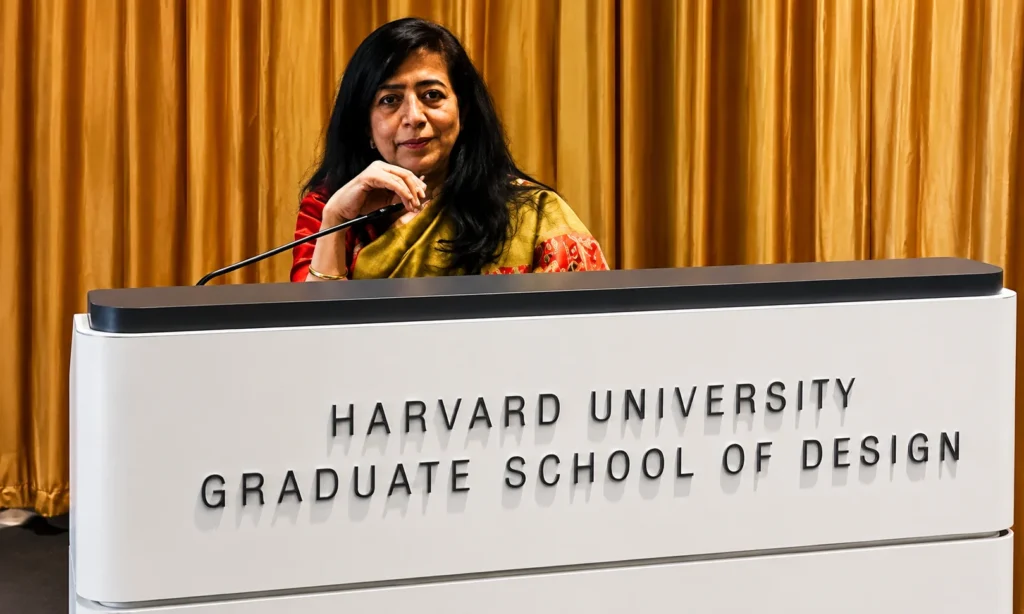
From Local Lakes to the Global Stage: A Landmark Moment at Harvard GSD
In April 2026, Mrs. Revathi Kamath brought India’s wisdom of ecological restoration to the Harvard University Graduate School of Design. Standing before a global audience of faculty and researchers, she delivered a landmark address on sustainable landscaping and the urgent need for lake rejuvenation. Her presence signaled a shift in global environmental stewardship, moving away from purely theoretical North-centric perspectives toward practical, rooted action. Collaborating with Professor Robert Zimmerman, she engaged in cross-border classroom dialogues that emphasized the power of lived experience—standing “knee-deep in the water” of dying lakes—as a vital form of scholarship.
The Science of Restoration: Advanced Techniques in Lake Rejuvenation and Soil Health
Mrs. Kamath’s work is defined by advanced landscaping techniques that prioritize ecological sensitivity over aesthetic convenience. Her presentation detailed a scientific framework for reviving degraded water bodies through:
- Hydrological Restoration: Implementing desiltation and bund reinforcement to revive natural groundwater recharge cycles.
- Native Plant Science: Utilizing native species along shorelines to rebuild freshwater biodiversity and restore soil health.
- Water-Sensitive Urban Design: Aligning modern development with environmental preservation to combat rapid urbanization and climate disruption.
- Community-Led Monitoring: Ensuring long-term sustainability by training local communities to manage and monitor their natural ecosystems.
Through these methods, lakes once considered lifeless now support migratory birds, lotus blooms, and clean water for surrounding neighborhoods.
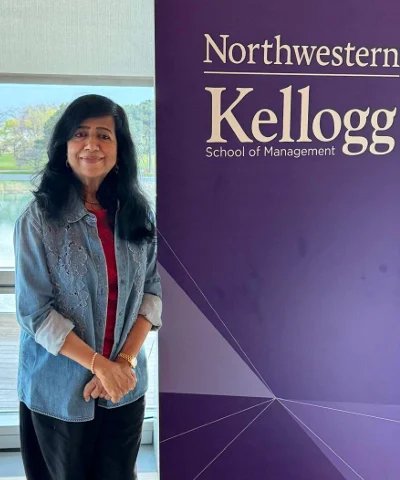
Purpose-Driven Leadership: Bridging the Gap Between Business and Sustainability
During a fireside chat at the Northwestern Kellogg School of Management, Mrs. Kamath shared her evolution from establishing Calyx Organic Farming to spearheading socially impactful initiatives across India. Hosted by the Kellogg Women’s Business Association and the Indian Business Conference, the session highlighted that meaningful work stems from a deep conviction to pursue what one truly cares about. She emphasized that business leadership should not just be a career path, but a journey guided by values and long-term societal contribution. By integrating sustainability into the core of her entrepreneurial ventures, she demonstrated that environmental stewardship and professional success are not mutually exclusive.
The Power of Lived Experience: Why Grassroots Wisdom is the Future of Global Scholarship
Mrs. Kamath’s visit to Harvard and Kellogg underscores the rising visibility of India’s grassroots practitioners in a global conversation often dominated by Western perspectives. Her “lived experience”—the practical wisdom gained from years of hands-on restoration—is now recognized as a powerful form of scholarship. By sharing stories of urban forests re-seeded and communities re-engaged with their natural heritage, she offered a model of environmental action that is human-centric and responsive to present-day ecological realities. This exchange proved that local, practical insights are urgently needed to solve global sustainability challenges.
Conclusion: A Legacy of Stewardship: Lessons from India’s Environmental Champion
Mrs. Revathi Kamath remains a dedicated “servant of the natural world,” maintaining the quiet intensity of a lifelong learner even at the height of international acclaim. Her journey—from the banks of Bangalore’s dying lakes to the podiums of the world’s most prestigious academic institutions—serves as a testament to the impact of patient, community-driven leadership. The key lesson from her global address is clear: environmental restoration is not just about science; it is about restoring community, memory, and hope.